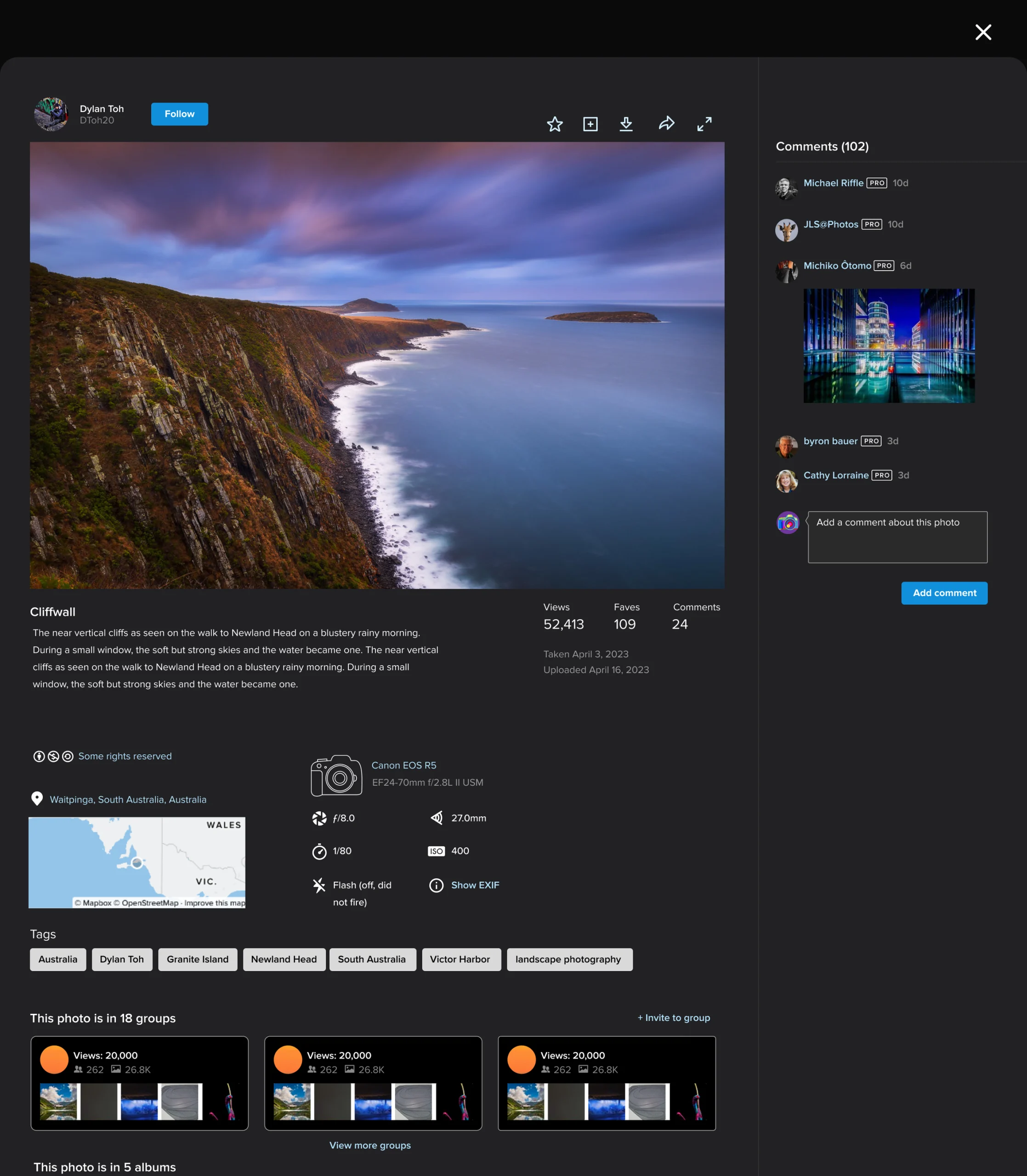
Flickr Photo Page
Project Insights
The Problem:
The Flickr Photo Page is one of the platform’s highest-traffic destinations — it’s where users spend the most time exploring individual photos, reading comments, and discovering new photographers. My challenge was to redesign the page to balance growth (upsells + ad real estate) with community engagement — ensuring the page still felt immersive and photography-first.
My Role
Senior Product Designer
Tools: Figma, SurveyMonkey, internal testing, and Jira for sprint collaboration.
Deliverables: High fidelity layouts, interaction flows, and vision for long term improvements.
Research first
I partnered with various teams to review engagement metrics (CTR, bounce rates, time spent on page) and conducted a user survey to understand browsing behaviors. Together we learned:
-
Key friction points
-
Optimal ad placements
-
Dark mode for a photo page felt more immersive to our users
-
Comments were most viewed on the page
-
Lack of loopholes
Methods
-
User survey asking daily active users their view of the photo page
-
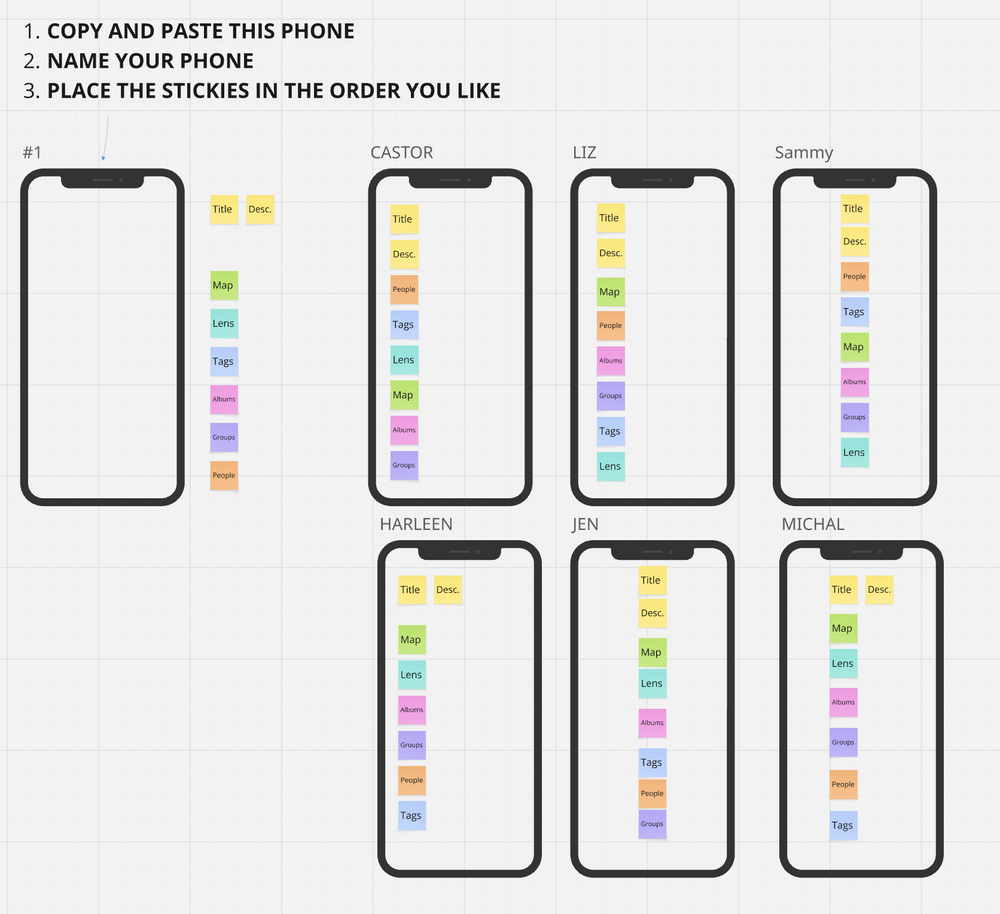
Hierarchy exercise with the team to understand which parts of the page are most important
-
Design different layouts for A/B testing
Design Process
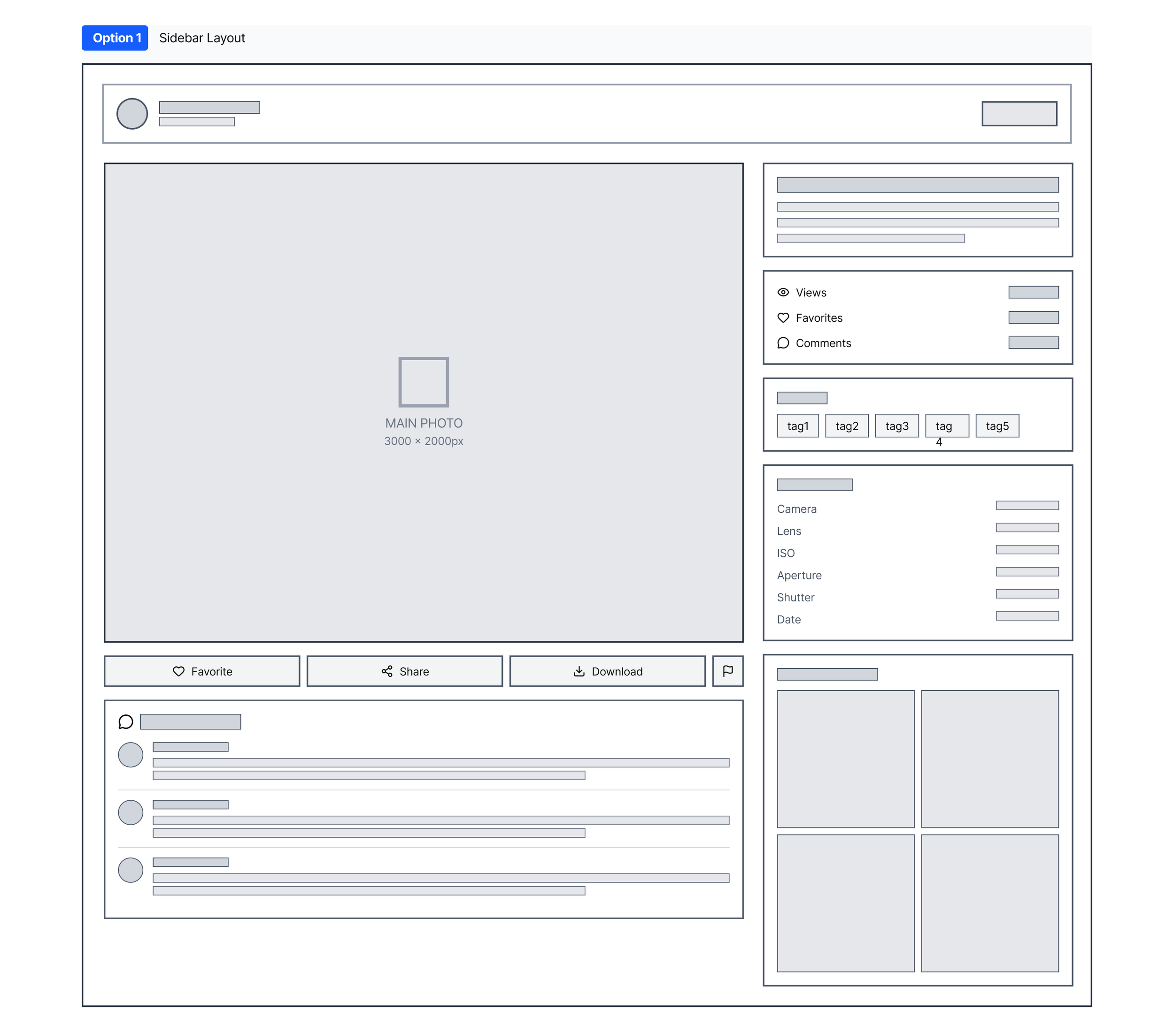
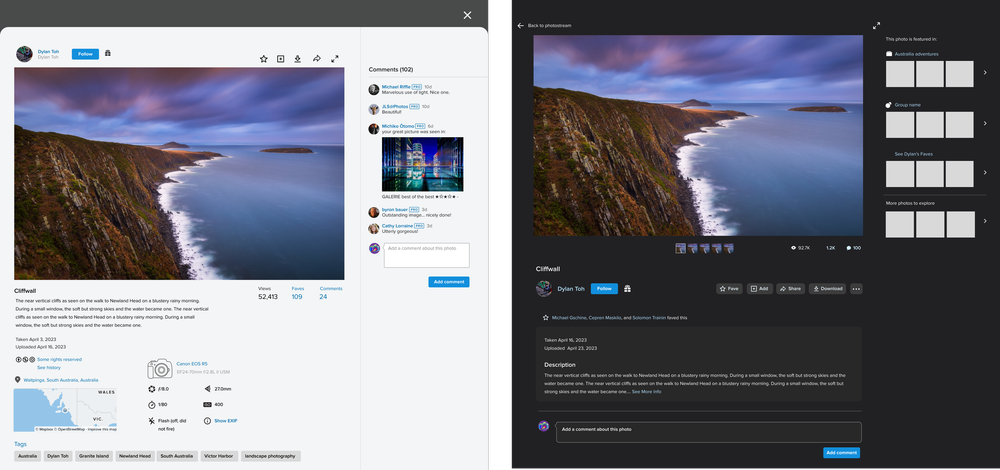
Collaborating with product, marketing and engineering helped inform two new layout options. We performed an A/B test to compare the existing page with the new layouts, including a sidebar view and a centered view.
Layout Design:
Introduce a sidebar that dynamically adjusts based on user type
Integrated related content modules (same photographer, similar tags, trending themes) to boost engagement.
Reserved flexible ad slots that align visually without breaking immersion
Outcome
+25% increase in time spent per photo page.
+800 monthly subs in – contextual upsells
Overall improved ad view metrics without reducing engagement
Learnings & Reflection
This project proved that thoughtful design can balance business and user value without compromising Flickr’s creative spirit. By introducing contextual monetization opportunities and deeper engagement pathways, we evolved a static photo page into a dynamic ecosystem — one that serves photographers, Pro members, advertisers, and the brand simultaneously. The redesigned Photo Page became a model for modular experimentation across the Flickr ecosystem — influencing how we approach personalization which can help reduce churn.